
Receive new posts as email.

| Sun | Mon | Tues | Wed | Thurs | Fri | Sat |
|---|---|---|---|---|---|---|
| 1 | 2 | 3 | 4 | 5 | 6 | 7 |
| 8 | 9 | 10 | 11 | 12 | 13 | 14 |
| 15 | 16 | 17 | 18 | 19 | 20 | 21 |
| 22 | 23 | 24 | 25 | 26 | 27 | 28 |
This site operates as an independent editorial operation. Advertising, sponsorships, and other non-editorial materials represent the opinions and messages of their respective origins, and not of the site operator.
Entire site and all contents except otherwise noted © Copyright 2001-2009 by Glenn Fleishman. Some images ©2006 Jupiterimages Corporation. All rights reserved. Please contact us for reprint rights. Linking is, of course, free and encouraged.
Powered by
Movable Type
Because we didn't have enough on our minds on election day, the FCC met and made three relatively massive decisions: Let's start with white spaces. I have been avoiding posting too much about the topic, because it's mindbendingly boring to the average reader or businessperson who is more interested in technology or developments when they happen, not when they're discussed ad nauseum. The gist of the white spaces proposal is that computer industry giants want television channels that are unused in specific markets to provide assurance of a lack of interference among adjacent channels.
Microsoft, Google, Intel, HP, and many others covet the space to use for high-speed wireless networking for broadband and wireless LANs. Over short distances, rates rival 802.11n Wi-Fi speeds; over longer distances, speeds will likely be closer to 10 Mbps. The expectation is that the frequencies, way down in the 54 to 698 MHz range, would have enormously superior propagation characteristics when coupled with higher power limits than Wi-Fi's 2.4 GHz or 5 GHz deployments. With adaptive scanning required to avoid stepping on licensed users, the white spaces technology would likely be much more resilient than Wi-Fi, too, as well as having a larger span of channels on which to choose to operate.
The National Association of Broadcasters, representing owners of TV stations and networks, protested that regardless of how well designed devices were to avoid interfering with TV signals, it was inevitable that they would. Dolly Parton surprisingly entered the fray--nearly a la Wi-Fi patron Hedy Lamarr--on behalf of the wireless microphone industry, which has a licensed low-power use for theater and performance.
The FCC voted 5-0 to move forward. Manufacturers would still be going through tightly controlled FCC certification and testing for their devices, and one imagines the NAB will be watching very closely as well.
The FCC also voted 5-0 to approve a WiMax merger/spinoff that allows Sprint Nextel to reorganize its Xohm broadband operation into a new firm that would be merged with Clearwire's assets and be named Clearwire. The new operation already has billions lined up from Google, Intel, and cable operators to invest. The Justice Department already gave its general go-ahead, too.
This move sets the stage for a real battle among all broadband providers: it will force AT&T and Verizon to move quite aggressively to use the new 700 MHz bandwidth they acquired (and plan to deploy GSM-based LTE over, even though LTE is still officially in the lab, not in production); and for wireline provides like AT&T and Verizon, as well as Comcast, Cablevision, Qwest, and all the rest, to rethink pricing, speed, and services that Clearwire enters. If WiMax pans out as a viable third or even fourth pipe into the home, other broadband options in the same markets will be cheaper and faster.
Finally, in the least-interesting part of the news, the FCC voted to approve, with Dems partially dissenting--procedural thing, it appears--to allow Alltel to be acquired by Verizon to create the biggest U.S. cell carrier. Alltel was the largest of the smaller carriers, as it were, providing service in areas that the major carriers often overlooked. The Alltel acquisition is partially an infrastructure play that reduces Verizon's roaming costs while expanding its customer base.
Posted by Glenn Fleishman at 3:37 PM | Permanent Link | Categories: Financial, Regulation, Spectrum, WiMAX | No Comments
Starbucks informed me that it, AT&T, and T-Mobile have signed a memorandum of understanding about the free Wi-Fi kerfuffle: T-Mobile filed a lawsuit a few days ago against Starbucks stating it wasn't involved in discussions about its network carrying free loyalty-awarded Wi-Fi via AT&T's authentication system. Now the three companies are apparently making nice.
The statement from Starbucks reads: "T-Mobile, AT&T and Starbucks have entered into a memorandum of understanding to resolve their disputes and are committed to providing a high quality WiFi experience for customers, including Starbucks Rewards Customers, at Starbucks locations nationwide."
My interpretation is Starbucks said, oops, our bad, and they're figuring out the dollars and cents. Sometimes companies move too rapidly. T-Mobile is a quasi-jilted suitor, although they get something out of AT&T transition, too, so they're not likely to cut any slack.
Reuters confirms that AT&T confirms the statement. I separately confirmed with T-Mobile that the statement is accurate as well.
Posted by Glenn Fleishman at 10:07 AM | Permanent Link | Categories: Financial, Free, Hot Spot, Legal | No Comments
 The LiveTV division of JetBlue will assume Verizon Airfone's operations, which includes 100 towers with communication gear in the US: While Airfone ceased commercial operations in 2006 following their giving up early in the bidding for plum spectrum won by AirCell, they still have governmental and corporate ("general aviation") customers. JetBlue's LiveTV won the smaller of two licenses (1 MHz); AirCell won the 3 MHz auction. AirCell built its own network (an expansion of previous general aviation service), and is launching very shortly with Virgin America and America Airlines.
Ostensibly this purchase allows JetBlue a faster and simpler path into operations. Whether it's worth it to JetBlue is hard to tell, except that they will likely be marketing this service to other airlines as a differentiator. It will be lower bandwidth than AirCell, but could be likewise cheaper and used for shorter-haul flights.
Verizon notes some of the technical details of their service's business status on a FAQ for their corporate customers, which has an oddly large amount of business detail. Verizon was obligated within two years of the end of the auction for the spectrum they occupied with their very inefficient narrowband analog service to cease operations on those frequencies. That date is about now (the certification of the auction results was close to two years ago), and Verizon clearly worked out the details to allow current customers to maintain continuity through the spectrum vacation and into JetBlue's hands on January 1.
As I noted a few days ago, a few sources had already tipped me that JetBlue's test aircraft with Wi-Fi onboard and email was using the ancient Airfone network, which is capable of slow dial-up modem speeds, rather than using the 1 MHz which could conceivably carry over 500 Kbps of data in each direction per plane.
Posted by Glenn Fleishman at 9:47 PM | Permanent Link | Categories: Air Travel, Financial | No Comments | No TrackBacks
 MetroFi will sell its networks, but plans to shutter if there are no buyers: Ah, folks, the trifecta has arrived, and I'm nothing but sad about it. MetroFi's chief Chuck Haas emailed me this evening with the news that his firm has decided that they will sell their networks in nine cities, including their first cities in the Bay Area (Cupertino, Santa Clara, and Sunnyvale), and their largest muni deployment in Portland, Ore. If no buyers emerge--including the cities in question--Haas said that MetroFi would have a shutdown plan for gradually unlighting the networks. Update: Portland has been offered its network for $894,000; the city is "considering it."
MetroFi was one of the three most prominent pure play metro-scale Wi-Fi firms, if you count EarthLink's municipal wireless division as a separate operation, and Kite Networks, which was a subsidiary of a larger telecom firm. Each company had made a unique network hardware choice--MetroFi, SkyPilot; Kite, Strix; and EarthLink Tropos plus Motorola--and each had a sort of specialty. Interestingly, a fifth firm, BelAir powers Toronto (a small but super-fast Wi-Fi network) and Minneapolis (the only putatively completed large-city Wi-Fi network), and will be behind Cablevision's nearly $350m New York Wi-Fi plan.
MetroFi was the only major firm to back ad-supported no-fee access, coupled with paid, no-ads service, and higher tiered commercial offerings. They built mostly smaller cities, with Portland being their only real big city win. The firm began with the notion of building Wi-Fi out gradually as a way to provide broadband in communities that lacked service, with no municipal involvement. That plan required sparser networks and typically a home signal booster designed by SkyPilot. (Kite mostly focused on the Southwest; EarthLink on big cities.)
EarthLink was in many ways largely responsible for the mess that all Wi-Fi providers found themselves in last year by offering to build Philadelphia's network back in 2005 at no cost to the city--in fact, paying the city and the local utility fees. That set the stage for nearly all the RFPs that followed where, if EarthLink were a bidder or the city was aware of the alternatives, the notion was that no city dollars would be spent, even if taxpayer money wasn't "at risk"--that is, even if a city could save money by switching current line items in their telecom and data budget to a wireless network.
Haas noted via email that MetroFi has been working towards anchor commitments by cities for nearly two years, but the inertia of those early networks led municipalities to reject those options. In Toledo, where MetroFi had negotiated an anchor commitment, a change in administration led a new mayor to retreat from the plan.
Is there a future for metro-scale Wi-Fi? Yes. With thoughtfully constructed, outdoor-focused deployments centered on municipal purposes, with public access a secondary issue, it seems like these networks could still provide an inexpensive way for relatively high bandwidth compared to the alternative of cell data networks.
However, that advantage is likely short lived in larger markets. The near-future certainty now that there will be multiple provides offering wired broadband speed service starting later this year with Sprint/Clearwire's WiMax, and continuing through into 2012 with significant network buildout by Verizon and AT&T in several bands (including their new 700 MHz holdings).
While Sprint/Clearwire is talking about 120m to 140m homes passed by 2010 with their network, obviously focusing only on major markets, many of the 700 MHz licenses purchased by AT&T and Verizon carry buildout requirements with penalties. So cities outside the top 100 population markets and rural areas will still see some benefit. In those mid-tier markets, there's also the 3.65 GHz band for shared licensed use, which is a model that Azulstar is pursuing with new WiMax deployments, as I wrote about recently.
Competition will likely push the cost of mobile broadband far below its $60 per month 2-year contract rate of today, which then would beg the question why a city or county with good commercial coverage would need to build its own Wi-Fi network. There are still plenty of reasons to build dedicated, first-responder 4.9 GHz public safety networks, of course.
I've always described Wi-Fi on a metropolitan scale as the best, worst technology. The best, because everyone has Wi-Fi in their laptops and increasingly in handhelds and gadgets. The worst, because the technology is absolutely not designed for the purpose, unlike CDMA and GSM evolved cell standards and mobile WiMax.
It's possible that in the long term, looking five years out, that Wi-Fi on a metro-scale will only be needed in small towns, odd markets, and for highly particular purposes. Or, perhaps in a bit of irony, where companies like Cablevision feel Wi-Fi is necessary to retain the loyalty of their highly wired customer base.
Posted by Glenn Fleishman at 9:47 PM | Permanent Link | Categories: 4G, Financial, Free, Metro-Scale Networks, Municipal | 4 Comments | No TrackBacks
Why don't service providers tell you what it costs? In this mobile post, I inveigh against the practice of hiding one's prices coyly, like the menu at an expensive restaurant.
Posted by Glenn Fleishman at 11:31 AM | Permanent Link | Categories: Financial | 1 Comment
Cablevision will offer free Wi-Fi to its customers across a swath of New York: The company will spend an astounding $350m over two years--roughly $100 per customer--to put in service that they peg at offering 1.5 Mbps downstream rates. Broadband subscribers to their Optimum Online broadband service, which has rates of 15/2 and 30/5 Mbps. Others will pay for access. The company has 3.1m cable customers in New York.
This is the first large-scale Wi-Fi network announced that had no public/private component to it. While Verizon once said they'd blanket New York City with payphone-based Wi-Fi nodes, that never materialized, and it was unclear how seamless the coverage would ever be. This is a full-blown metro-scale network that's not beholden to any political interest, and which can likely use mounting rights already available to Cablevision. (In the past, I've said this, and folks have said that franchising agreements would exclude additional mounted equipment of this kind. Years later, I have to say I've never found anything to support that opinion, but welcome more documented information in the comments.)
The idea is for Wi-Fi to act as a mobile broadband component for Cablevision, to dilute the impact of the Sprint/Clearwire deal announced yesterday. While cable companies rarely compete in a given territory, the Sprint/Clearwire joint venture will make it easier for a customer to get home and mobile broadband and voice from one company, and then turn to another firm for video. This buys Cablevision a quadruple play (voice, video, data, mobile broadband) with a future quintuple play by adding (as they say they will) voice over Wi-Fi service.
Sources indicate that BelAir equipment will be used, which makes sense given BelAir's release nearly three years ago of a cable-plant compatible Wi-Fi node designed essentially for precisely this contingency. This is a nice win for BelAir, which will likely be selling somewhere north of 15,000 nodes based on the coverage area and service described. BelAir gear also powers Minneapolis, the only successfully completed big-city Wi-Fi network in North America.
Posted by Glenn Fleishman at 1:21 PM | Permanent Link | Categories: Financial, Free, Hot Spot, Metro-Scale Networks | 1 Comment
Sprint seemed awfully clever when it navigated a public safety deal and gained new spectrum as part of its acquisition of Nextel: That's all unraveling now. The FCC and the courts are saying that a 26-June-2008 deadline for vacating its 800 MHz holdings in favor of public safety groups would hold even if the new users weren't on the band. The delays for new users getting on the band are reportedly Sprint's, given that it had the responsibility for this migration.
Nextel had splintered holdings in the 800 MHz band that were difficult to administer, and caused verifiable interference with (and vice versa) splintered public safety spectrum in that band. Sprint agreed to pay the estimated multi-billion-dollar cost of getting new equipment to public safety agencies in exchange for a hunk of spectrum that they wouldn't have to buy at auction from the FCC. The cost for a whole set of swaps, migrations, and givebacks was $4.8b, but there was technically no limit on how much Sprint would have to pay for public safety migration--as much as it cost is the true limit.
Last August, the Wall Street Journal did a lengthy update of the 2005 deal, explaining that the effort was vastly behind schedule, and was vastly underbudgeted, too. One county in Pennsylvania estimated that its costs could run $18.5m to $150m, with the low number far above Sprint's own estimates.
It would be seemingly unfair to allow Sprint's delays in moving fire, police, and first responders off the band to also delay Sprint's requirement in vacating the band. We'll see how the FCC chooses to respond. It could cost Sprint billions and further accelerate the loss of Nextel customers, because Sprint would lose a number of active iDEN sites.
They have no one to blame but themselves. Sprint's management has blundered through this merger for years. They kept separate Kansas and Virginia headquarters, failed to produce high-quality dual-network devices, gave few incentives for Nextel customers to move to Sprint's dominant CDMA network, bled employees, and botched this migration.
Now Sprint did have the problem of needing to help move incumbents in the 1.9 GHz spectrum it received and the 800 MHz spectrum it was giving up. The articles on this court decision don't note whether Sprint's 1.9 GHz network is free and clear, nor whether Sprint had been working for the last three years to get its Nextel users to get dual-band handsets that would work with the new frequency.
With the WiMax plan also on the table, Sprint was basically committed to building or rebuilding and supporting four network architectures: CDMA (for 2G), EVDO (for 3G), WiMax (for 4G), and iDEN (for 2G).
Sprint is in the position where it may variously be sold (to Deutsche Telekom to merge with its T-Mobile USA division, which would add both GSM and UMTS/HSPA to the mix!), sell off its Nextel division (to a public safety venture headed by Cyren Call), and/or spin off its WiMax division or form a broad venture with Clearwire to build and market it.
Update: Oh, yeah, and Qwest walks away from Sprint partnership, switching to Verizon Wireless as its partner. Qwest spun off its cell division years ago, and has no overlap in its wireline territory with Verizon.
Posted by Glenn Fleishman at 2:25 PM | Permanent Link | Categories: Cellular, Cluelessness, Financial | No Comments
Ten thousand is an arbitrary place to put a stick in the sand, but significant nonetheless: The milestone of 10,000 McDonald's wired up--a few hundred have back access only, due to being stores within WalMart centers--is a vindication of Wayport's long-term strategy, dating back to 2004. Wayport switched at that point from a slightly more public-faced, public-access company to one that understood that back-office operations could be just as valuable, if less sexy, than front-facing consumer networks. Dan Lowden, Wayport's long-time marketing and business development chief, said yesterday, "In a lot of these venues, the back office comes first. The Wi-Fi public access for some is a big priority, but for others it's a nice to have, great thing to have, but the priority is the back office."
Although several other quick-service restaurants like McDonald's lack any comprehensive Wi-Fi plan--Burger King, Wendy's, and Subway to name three of the largest--Wayport is locked out of working with direct competitors. This opens the potential for another firm to handle a several-thousand-location network. Wayport has worked with both McDonald's corporate-owned stores (about 2/3rds of stores in the U.S.), as well as reaching out to franchisees, who Lowden noted pay a predetermined flat rate for the service via McDonald's. "It's made them incredibly efficient to be able to offer this to their franchisees at one price, instead of variable pricing," he noted. Wayport acts as the layer between various telecom providers, applications and services, and the stores.
Wayport provides several kinds of back-office services, although credit-card processing was the first thing htey rolled out. They've extended to remote video feeds for security, Redbox DVD rental systems that are found in some McDonald's, and kiosks used for job applications. Lowden said Wayport offers things as straightforward but critical as a dial-up fail-safe when a broadband connection drops.
Wayport also manages AT&T's hotspot network, which puts them in the unwiring seat for the 7,000-odd Starbucks stores that will converted from T-Mobile to AT&T service during 2008. Wayport was once the clear leader in the hotspot builder market, with T-Mobile in the second position. Now, Wayport will be operating through a direct contract or management agreement over 18,000 hotspots in the U.S.; T-Mobile will likely be the second biggest with a couple thousand locations (Borders and FedEx/Kinko's tops among them). The No. 3 player is hard to figure. Panera?
I've been predicting for some time that media on the edge--music, videos, movies, and games stored on servers on the local Wi-Fi network--will be the next big development in venue-oriented Wi-Fi, with Starbucks likely far in the lead. Lowden wouldn't comment on any specific plans in the works, of course, but said generally, "Storing and caching all that content on the edge...hasn't been leveraged in the past, but it will be in the future to create a very unique experience." At Barnes & Noble, Wayport caches some multimedia data that's available to customers in the stores.
The advantage for in-store media storage is that you can leverage the speed of the local network, and add additional access points to distribute network load. The choke point is no longer the Internet connection, but local network speed. I expect--though Wayport, AT&T, and Starbucks haven't said it--that Starbucks infrastructure will be all 802.11n for this reason, likely with both 2.4 GHz and 5 GHz support for the best throughput in the higher-frequency band for media transactions. (In fact, I wouldn't be surprised if you could only buy movies via 5 GHz.)
Lowden also noted that the proliferation of mobile devices with Wi-Fi built in have led to them reaching out to venues that wouldn't have made sense for them to work with previously, and for unlikely candidates to reach out to them, too. Wayport is now working with a number of healthcare facilities that, while they have their own network infrastructure, wanted to outsource public access Wi-Fi (whether they choose to charge or underwrite it), and certain applications that they're not as experienced with running themselves.
A little history: In 2001 and again in 2004, the heat seemed to be on the public side of Wi-Fi: lots of money to be made, ostensibly, lots of partnerships and venues to be built, and an overcrowded supply of infrastructure builders. The year before, Wayport looked to be an also-ran in the hotspot provider business.
Despite being one of the earliest firms to put Ethernet and then Wi-Fi into hotels, and build out hotspots in airports; and despite their survival of the first hotspot meltdown in 2001 during the dotcom crash and brief venture capital shortage; and despite their early entrance into allowing wholesale pricing for hotspot aggregators; the firm seemed about to be eclipsed by apparently deep-pocketed Cometa (with AT&T, IBM, and Intel in various capital and support roles), Toshiba's mom-and-pop focused turnkey system, and T-Mobile, which had the Starbucks contract. What a difference a year makes.
Cometa, Toshiba, and Wayport contended for the contract to build out back-office and public-access service at McDonald's in the U.S., and Wayport won. Within a few weeks, Toshiba passed its few hundred locations to Cometa, which shut its doors in May 2004. Wayport, meanwhile, had cooked up a strategy for McDonald's that it announced later that month.
Their approach involved a fixed-rate charged for unlimited access by retail network partners for all the locations in their pool. This meant that partners had a fixed cost, instead of a per-session cost, and Wayport could obtain specific revenue even before usage by a partner ramped up. Wayport hasn't discussed the details of this arrangement in depth since, but has partnered with Sony with its Mylo, Nintendo with its DS game player, and ZipIt with its wireless messaging appliance.
The McDonald's deal also apparently gave Wayport a way to extend its work with SBC-later-AT&T; Wayport had earlier in 2004 became the managed-services contractor for SBC to build out The UPS Store/Mailboxes Etc. nationwide. (UPS dropped AT&T as its partner in mid-2007, although that didn't appear to have anything to do with Wayport's role.)
AT&T through Wayport developed its large resold/managed footprint that incorporated resale of Wayport's McDonald's locations with the UPS Store and a few hundred other managed locations, including a handful of airports. The Cingular acquisition of AT&T Wireless put more airports in SBC's hands, too. (SBC was once the 60 percent majority owner of Cingular; when SBC and BellSouth, the other owner, merged that put the newly rebranded AT&T in charge of Cingular which it relabeled as AT&T. Confusing, huh?)
Posted by Glenn Fleishman at 9:25 AM | Permanent Link | Categories: Aggregators, Financial, Hot Spot | No Comments
The Big Easy gets a big loss with EarthLink's pullout: InformationWeek reports that EarthLink attempted to sell the network, get the city to buy it, and then to simply give the network (and its obligations) away, but had no takers on any front.
EarthLink announced its most recent quarter's earnings a few days ago, and they managed to turn a GAAP profit, while staunching the bleeding of so many businesses that had no short-term and seemingly little medium-term potential for net revenue. The company dramatically slashed its marketing, which they found only caused subscribers to join and quit. While revenue dropped from $290m to $235m year over year in Q1, operating costs and expenses were cut from $321m to $198m, with the most noticeable drop in sales and marketing ($99m to $31m) and operations and customer support ($60m to $39m). They recorded $58m in earnings versus a year ago's $22m loss.
Employees dropped from 2,108 to 922 during the period, while subscribers dropped from 5.7m to 3.6m. But it's worth noting that the biggest drop happened last year already: the 31-Dec-2007 subscriber count was 3.9m. They're making slightly more money from each of those remaining customers, and have slightly lower churn. Their municipal write-off is lower, too, as they've taken most of the expense, and have offloaded more and more of their future obligations.
The company still has the same problem that it had before it started unwinding its services beyond dial-up and broadband: None of its markets are expanding, and it has increasingly poor access to reasonably priced broadband to resell to customers, as no cable or DSL providers are obligated to provide true wholesale rates.
Posted by Glenn Fleishman at 3:52 PM | Permanent Link | Categories: Financial, Municipal | No Comments
Even the losers win in this auction: The gag order from the FCC over the bidding and results of the 700 MHz spectrum auction were lifted yesterday, and everyone is jabbering. Verizon and AT&T have announced they'll build LTE (Long Term Evolution) cell data networks, a GSM standard, in the 700 MHz band. AT&T says their network will come online starting in 2012; Verizon, 2010.
Google posted on their own blog and told the New York Times that they were happy enough losing, even though they bid to win...sort of. They raised their own bids a few times to keep interest from other players, but were relieved when another bidder topped them. That turned out to be Verizon Wireless. Google managed to get a few types of openness encoded into the band, and they think (rightly so) that it made a difference. An economist notes in the Times article that Google now only has to spend "$1 million a year on a law firm to ensure Verizon lives up to the openness requirements."
AT&T didn't bid on the C Block that Google was discussing, a set of licenses that provide national coverage in a few easy pieces. Rather, they focused on acquiring 700 MHz spectrum before the auction from Aloha Partners (from the previous 700 MHz auction), and spending billions on smaller licenses all over the country that they can pin together. Those licenses are unencumbered by open device, application, and service provisions, so AT&T thinks they got the better deal. A good summary is at Phone Mag.
Verizon for its part said it was pleased with its national-scope licenses. Despite AT&T acquiring lots of spectrum, it's going to be far easier for Verizon to use these nationally defined bands, with consistent performance across all their networks.
Posted by Glenn Fleishman at 11:45 AM | Permanent Link | Categories: Cellular, Financial, Future, Regulation, Spectrum | 1 Comment
The Ricochet network had continued to operate in Denver, passing through multiple hands, until its death March 28: I feel like playing taps. The Ricochet network, started up by Metricom, which spent billions and sold some assets for pennies on the dollar, was closed by Civitas, a company formed by the president of then-owner Terabeam's Ricochet division. The Ricochet site notes service halted on March 28.
 The company claimed 6,000 users as of last August, but it seemed like a hard row to hoe competing as it was essentially against 2G/2.5G cellular data service that can be had for a pittance through embedded devices and cards. I tried to reach the company, and while its phones still work, the Civitas voice tree hangs up when you try to reach a real person, and Ricochet's tells you the network is shut down, and directs you to their Web site.
When I wrote about the sale in August 2007, I noted that Civitas was claiming "a decade of experience operating large-scale wireless deployments," which was specious. I noted, "That’s only true if you count some of the equipment mounted in Denver as continuous employees of the company."
Goodbye, Ricochet, an idea first way ahead of its time, and then way, way behind it.
Posted by Glenn Fleishman at 1:05 PM | Permanent Link | Categories: Financial, Unique | 3 Comments
Verizon is the big winner in the 700 MHz auction, gaining the 20-odd MHz C Block set of national licenses: The FCC has announced the provisionally winning bidders in the nearly $20b auction that ended a few days ago with over 1,000 licenses at stake. Verizon spent $9.6b overall ($4.7b of that for the C Block licenses) in the auctions, while AT&T spent $6.6b, Echostar $711m, and Qualcomm $1b. The variety of other licenses obtain gives Echostar nearly national coverage, while Qualcomm is likely filling out its needs for MediaFLO, a national media broadcast network aimed at cell phones and mobile devices.
FCC Chair Kevin Martin has asked the FCC's inspector general to investigate what wrong with the D Block auction, which failed to receive its reserve bid. This was a mixed public safety/commercial band that Harold Feld, among others, alleges had its auction sabotaged through a set of vague requirements that could have led a winning bidder to forfeit its bid receipts while acting in a manner that conformed to the auction requirements.
Posted by Glenn Fleishman at 1:26 PM | Permanent Link | Categories: Financial, Politics, Spectrum | 1 Comment
The FCC's auction for prime 700 MHz territory nationwide is over: The auction took in nearly $20b before discounts for small businesses and other credits, but the FCC didn't disclose the winners. 1,099 licenses were at stake, with the 6 C Block licenses ($4.74b winning bid) were the ones most watched. The others shouldn't be ignored, even though taken one at a time, most of them are quite limited in geographic coverage. With that spectrum, regional operators will be able to build interesting networks that could compete with national players.
The big failure in the auction was the D Block, a national chunk of shared public/private spectrum that a winning bidder would operate in a manner that gave priority to emergency uses. The minimum bid was far from met: $1.4b was the reserve price, and bids never topped $500m. Rules for the block will have to be redesigned and rebid.
Posted by Glenn Fleishman at 2:59 PM | Permanent Link | Categories: Financial, Regulation, Spectrum | 2 Comments
Long Island Business News reports that E-Path's efforts to build a Wi-Fi network in Suffolk, Nausau counties so far for naught: As yours obedient has been reporting for months, the E-Path proposal accepted by the county executives of those two Long Island entities was long on minimizing political fallout, short on providing the kind of baseline financial commitment that has turned out to be essential in getting a wireless network built. The only networks being built or completed in the country right now have municipal service commitments--anchor tenancy--or were fully funded by municipalities for public safety and governmental purposes.
As the reporter notes, E-Path hadn't previously completed any network, and its in-progress networks are rather small. The company hasn't been able to secure any commitments from any municipalities for service, and, you guessed it, utility poles are a sticking point: E-Path hasn't gotten an agreement from the Long Island Power Authority to use its poles. The two pilot projects were supposed to be installed last December, but this article reports no progress.
Without anchor tenants, it's hard to raise money. It's hard to get anchor tenants if you don't have money raised to build out at this point; that wasn't true earlier. This is the same situation in all startup cycles. Early startups get optimistic customers who hope to be ahead of the curve, and are willing to be guinea pigs. With the inability of large-scale Wi-Fi networks to be completed--in some cases, even started--there's less interest in being the exceptional case.
Long Island's Suffolk and Nausau county executives have well insulated themselves from any problems with this network not being built, because they didn't invest in it. Which makes it fairly likely that the network will never be built.
Wi-Fi Networking News friend Craig Plunkett is quoted in the article; he runs a variety of hotspots and networks around the island, but didn't bid on this network. He uses an argument I'm fond of: "Any kind of dashboard diner or mobile worker is more inclined to go to a Starbucks than they are to use an outdoor location, unless their work specifically requires them to connect outdoors. So that further erodes the available market for E-Path."
 This is my backside-utility thesis. If you're doing more than making a phone call or looking up some data while mobile (in a cab, on public transportation, as a passenger in a car, or while walking), then you need a place to sit down and work. Most places you sit down and work already have Wi-Fi. If you need more than that today, you buy a data subscription for your smartphone (or already have one) for $20 to $60 per month, or buy a laptop card with 3G data for $60 to $80 per month. If you don't want to spend that much money, you don't really need the data while out and about.
E-Path also has the disturbing property of having borrowed the Microsoft Internet Explorer logo used before version 8 was released as the fundamental basis of their corporate identity (IE left, E-Path logo right). They added another ring. Given IE's reputation for security, reliability, and standards, it might have been the wrong graphic to choose, trademark issues aside.
Posted by Glenn Fleishman at 9:37 AM | Permanent Link | Categories: Financial, Municipal | 1 Comment
While driving by the Fremont Troll, I explain the new flat-rate paradigm of carriers, driven by competition from Wi-Fi, Skype, and other factors

Posted by Glenn Fleishman at 7:32 AM | Permanent Link | Categories: Cellular, Financial, Future, Voice | No Comments | No TrackBacks
Yesterday was pretty overwhelming, trying to sort out all the facts, and the impact: The bits and pieces of this industry-changing deal will keep shaking out until and past the launch. I have some detritus from yesterday to catch up on, as well as some new analysis of what this means. (You can also read my coverage in The Seattle Times, where I discuss this as more of a general business story.)
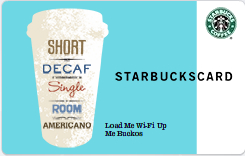
The Starbucks Card and free access: The press release from Starbucks and three conversations I had with them yesterday finally made clear what the free 2-hours access requires. You need a Starbucks Card, which is their stored-value card, not a credit card. (Their Starbucks Duetto credit card will, however, also qualify.) Starbucks Cards can be purchased at a store with a minimum fill of $5.00 that you can use to buy stuff at the store. Once you have the card, free Wi-Fi service is activated by a single purchase of any amount on the card every 30 days. No purchase is needed each time you use the free Wi-Fi nor for the 30 days following a purchase! (A reader asked whether you also had to be an AT&T subscriber. No.)
 AT&T's network scope and pricing: AT&T isn't very clear about what they include in various free and fee roaming packages. After consulting their Wi-Fi site and talking to an AT&T spokesperson yesterday, I think I have the story. DSL, fiber, and business remote-access customers (the 12m we've been discussing) get the Basic package included at no cost, which isn't 17,000 (with Starbucks included) but isn't far off. It's McDonald's (8,500) plus Starbucks (7,000) plus Barnes & Noble (several hundred) and a few other chains/venues and airports that AT&T operates itself. Most U.S. hotels and airports operated by other providers require a Premier subscription, which also adds 53,000 international locations. For those who get Basic for free, the Premier subscription is $10.00 per month; all others, Premier is the only option for a subscription, and it's $20 per month. Pricing is explained, but not very clearly, on their Wi-Fi page; you have to look at that page and then at the location finder to sort this out.
AT&T Wireless customers: There's no deal here for anyone but DSL, fiber, and remote-access business customers. Those will cell plans don't (yet) get anything special. That includes...
...The iPhone: No iPhone update yesterday, but everyone I interviewed was winking slyly.
Media in the stores, and Apple: Starbucks chief technical officer as much as told me that Starbucks has Apple media servers in their stores that feed out songs and previews based on what's programmed in the stores. The move from there to caching digital movie rentals and popular downloads is very, very small. I've written a long piece explaining this for Mac journal TidBITS: Starbucks Deal Brewed with AT&T Has Hints of Apple. You're going to walk into Starbucks, log onto free or cheap Wi-Fi, and download a movie for rental in a few minutes from the local network.
3G iPhone: Oh, yeah, I predict Starbucks will be part of the launch plan for the 3G iPhone, which I would now wager will appear in second quarter because that's when AT&T will have some markets up and running with Wi-Fi in the coffeeshops.
Location: Starbucks CTO Chris Bruzzo also emphasized community, location, and digital experience. He had few specifics, but the idea of bringing in portable devices, like cameras and games, and spending time interacting online in some fashion, yet to be described, with a community that's highly local to the store seemed the theme. He also mentioned location-based services in passing, since each store obviously has a fixed location; T-Mobile was providing some location-based information before this, but more extensive offerings sounds planned. Bruzzo was hip about broadcasting Web services that devices on the network would pick up, instead of talking about a Web browser to Web server equation, which is more laptop oriented.
Many devices, one account: You'll be able to use the same account or Starbucks Card code to bring multiple devices online at the same time, within reason. Bruzzo at Starbucks said it would be handled in a reasonable fashion; an iPhone and laptop logged in at the same time wouldn't cause the system to complain. They'll track MAC addresses--that's adapter unique IDs--to avoid real abuse.
Wi-Fi as glue between home and true mobility: AT&T also told me yesterday that the abundance of "free" in this deal had to do with cementing a customer's connection seamlessly along whatever they do. Joe Izbrand, a spokesperson, said, "The benefit is in our ability to continue to big the largest Wi-Fi connect, to deliver converged connectivity across the board, it's part of what we're trying to do to keep people connected no matter what they're doing, on the home, on the road, whatever. In the competitive marketplace, that's a real differentiator."
T-Mobile and Starbucks: As noted yesterday, T-Mobile data subscribers will have fee-free roaming access onto Starbucks when the transition to AT&T happens in each store, for now and "for years to come" according to a revised statement released late in the afternoon yesterday by T-Mobile. The statement also clarifies that T-Mobile HotSpot@Home customers who use the converged cell/Wi-Fi handsets for calling over either kind of network will also be included in this. The deal lasts "at least the next five years." I don't have details on this, but I have been told that the transfer of provider was abrupt, and I suspect that Starbucks made this a condition of the AT&T deal to avoid any of its customers being upset by a service transition. While numbers of monthly subscribers have never been released, it's likely in the 100,000 to 125,000 range. I can't see many fewer, and it's hard to see decisions T-Mobile made if the number was much larger.
Wayport's catbird seat: The first person I called when I heard about the deal was Dan Lowden at Wayport, a long-time executive who has been through all the changes in the market. Wayport is AT&T's managed service partner, and has the direct contract with McDonald's, to which Wayport resells access to AT&T; they're picking up 7,000 more locations to manage through this deal. "I think this is some of the biggest news in the industry ever," Lowden said, and I am loathe to disagree; the only other news that might qualify as "bigger" were failures, such as the shutdown of Cometa, which ultimately has made little difference in the market's evolution. In fact, the original Starbucks deal with MobileStar in 2001 was one of the factors that launched hotspot deployment at a faster pace. I asked Lowden about the role of mobile devices in their networks. "We work with a lot of these device manufacturers as they're coming to market" to ensure a good connection experience, Lowden said.
Posted by Glenn Fleishman at 1:55 PM | Permanent Link | Categories: Financial, Future, Hot Spot, Media | No Comments | No TrackBacks
The question is, of course, who's the sucker big enough to buy EarthLink's metro-scale systems? I say this with all due respect. There's just not a player in the market who would assume all of EartthLink's current systems, so it's likely that local bidders and potentially municipalities like Philadelphia pay fire sale prices--given that the other alternative for EarthLink is to pay someone to dismantle their networks and sell the equipment piecemeal.
Update: Read this marvelous coverage from Marguerite Reardon at News.com who has covered this issue for as long as I have. She talks to folks in a couple of cities served by EarthLink. She also notes the fascinating idea that Boingo Wireless, a company founded by EarthLink founder Sky Dayton, could be one of the firms interested in some of EarthLink's municipal assets. It's not that much of a stretch: there might be some cherrypicking that ties in with their existing wide-scale airport operations acquired a couple years ago.
Essentially, all of EarthLink's businesses are in decline. Dial-up customers declined significantly as, unfortunately, did their broadband service. They reduced their stake in Helio by not infusing more cash, which reduces both the downside and upside from the mobile virtual network operator business. Municipal networking is now classified as a complete bust. Where do they go from here? Improving cost structures appears to be the name of the game, but I don't see how they become anything but a smaller and smaller firm.
The company's earnings report today says that they lost $80m in 2007 from municipal operations, including a $28m impairment charge that wrote down the municipal assets' goodwill, essentially. They also took $111m charge from their involvement with Helio. Gross revenue was $1.2b, which shouldn't be understated. Despite the scale of their losses, they still have massive income.
Over the last year, the company went from 2,210 to 998 employees, lost 1.4m million residential customers. Their churn is an astounding 2.75m customers per year! That is, they started with 5.3m business/residential customers, added 2m, and lost 2.75m plus another 0.8m from an expired contract with Embarq (Sprint's landline spinoff). However, the company recognized last year that they were spending way too much to get customers for far too short a period; that's part of why their annual revenue per customer went up even while customer numbers were down. They shed $100m in sales and marketing expense year over year.
Posted by Glenn Fleishman at 6:52 AM | Permanent Link | Categories: Financial, Municipal | No Comments | No TrackBacks
Tempe, Ariz., is now alerting citizens who ask that Kite Networks is in default of their arrangement with the city: The city's deputy CIO, Dave Heck, the point person on this issue since its inception, replies to those who ask that potential buyer Telscape has "been unable to negotiate a deal with Gobility and its creditors."
The city has declared Gobility in default of its lease agreement, and declares the network abandoned as of 28-Dec-07, which gives the city some remedies, I believe, in seizing and removing equipment from city property. Because the gear was leased, I'm not sure what happens now with creditors, the lessor, and the city. Back when Ricochet went belly up, to put it nicely, some cities were stuck with bills that ultimately ran as high as $200,000 in at least one case to remove owner Metricom's devices to free up space, reduce electrical use, and improve safety.
Heck's email notes that customers who paid for but did not receive service need to dispute the charges with their credit card company.
Posted by Glenn Fleishman at 11:29 AM | Permanent Link | Categories: Financial, Municipal | 1 Comment | No TrackBacks
The FCC has received a "provisional" winning bid for the national "C Block" licenses in the 700 MHz auction underway: The C Block, a national set of about 20 MHz of prime frequency real estate, has received a bid crossing the minimum $4.6 reserve price: $4,713,823,000 to be precise. The overall auction now stands at $13.7b after 18 rounds. This pretty much ensures that the open access, open device rules so fought over and then acquiesced to by major carriers will be enforced, and it's likely to push more openness into existing U.S. cell markets.
Posted by Glenn Fleishman at 9:43 AM | Permanent Link | Categories: Cellular, Financial, Politics, Regulation, Spectrum | No Comments | No TrackBacks
The future of competition for broadband and cellular wireless hits one milestone, close to other: The 700 MHz auction currently underway will distribute thousands of licenses to entities across the country for effective, widespread distribution of broadband, voice, and other services. The C Block is the most hotly contested block, representing a set of licenses that covers the entire U.S. The reserve bid for the block was $4.6b; the current high bid is $4.3b, while the next qualifying bid must be at least $4.75b. The auction as a whole had to gross over $10.3b, and that mark was also hit around noon with $10.8b bid so far. That means that it's extremely likely now that the auction will conclude successfully, and that the C Block will be won. Google at one committed to the reserve price, so if they're bidding--bidders are anonymous in this auction--they will make at least one bid to cross that mark.
The mixed public safety/private use D Block is still up for grabs. The reserve price is $1.4b, but the bidding has hit only over $470m. If the bids don't reach the reserve price, the block will likely be reformulated. Harold Feld alleges monkey business in how the rules for the band were set for a putative winning bidder. In short, he writes that a one-time potential bidder moved into an advisory role to the body that will control the block for public-safety interests. He says that would allow them to set unreasonable terms for a winning bid, and that the FCC refused to set rules that would prevent unreasonable terms from being proposed. Thus, Frontline Wireless, the firm most likely to operate the D Block, shut down, as they couldn't come up with a strategy that was financially sound. (The auction rules state that if you default, you forfeit the difference between your bid and the ultimate winning bid; Frontline could have easily been out hundreds of millions of dollars in that scenario.)
Update: By day's end (Round 16), overall bids reached $11.5b, but no new bids had been registered for either the C or D Blocks.
Posted by Glenn Fleishman at 12:24 PM | Permanent Link | Categories: Financial, Spectrum | 1 Comment | No TrackBacks