
Receive new posts as email.

| Sun | Mon | Tues | Wed | Thurs | Fri | Sat |
|---|---|---|---|---|---|---|
| 1 | 2 | 3 | 4 | 5 | 6 | 7 |
| 8 | 9 | 10 | 11 | 12 | 13 | 14 |
| 15 | 16 | 17 | 18 | 19 | 20 | 21 |
| 22 | 23 | 24 | 25 | 26 | 27 | 28 |
This site operates as an independent editorial operation. Advertising, sponsorships, and other non-editorial materials represent the opinions and messages of their respective origins, and not of the site operator.
Entire site and all contents except otherwise noted © Copyright 2001-2009 by Glenn Fleishman. Some images ©2006 Jupiterimages Corporation. All rights reserved. Please contact us for reprint rights. Linking is, of course, free and encouraged.
Powered by
Movable Type
Femtocells arrive: Femtocells are cellular base stations the size of typical home broadband modems and gateways, one step below office-building picocells, designed to enhance a mobile carrier's network in interior spaces. I've been skeptical of femtocells for the several years in which they've been discussed as the Next Big Thing Next Year.
Apparently, 2009 is next year. Sprint introduced its Airave last year, Verizon just released its Network Extender, and AT&T slipped up and revealed plans for its 3G MicroCell, which is apparently 2 to 5 months away.
Femtocells vary from VoIP over Wi-Fi (whether via T-Mobile's HotSpot@Home or Skype over Wi-Fi using a USB headset) in that they use licensed frequencies for the area in which the femtocell operates. There's no chance of collision with other users, which makes voice calls for all three operators and data calls for AT&T (the only one of the three to support 3G data) consistent.
Sprint and Verizon's base stations allow up to 3 simultaneous voice calls. AT&T allows up to 4 simultaneous 3G voice calls or data connections. Sprint and Verizon's femtocells work with all existing 2G-compatible handsets, which is pretty much everything; AT&T is restricting its femtocell to 3G for a lot of sensible reasons.
I've written extensively about femtocell announcements and some of the carriers' strategy over in my general tech reporting gig at Ars Technica, but let me run down how this fits into the wireless data world.
Read the rest of "Femtocellarama: Carriers Opting for In-Home Base Station Offerings"
Posted by Glenn Fleishman at 9:08 PM | Permanent Link | Categories: 2.5G and 3G, Cellular, Future, Voice | No Comments | No TrackBacks
Novatel Wireless has introduced a sleek mobile 3G router that's seemingly far more than its competition: The MiFi is a cellular router due out in the first quarter of 2009, with pricing not yet disclosed. While there are several competitors on the market, notably from Junxion, a firm acquired by Sierra Wireless earlier this year, Novatel claims some unique qualities. The MiFi will have an internal battery that can offer 3G to Wi-Fi bridging for up to 4 hours of use and 40 hours of standby.
The slim unit appears to be designed around an integral card that's not removable, which is a departure from most similar designs, which allow interchangeable cards supplied by an integrator or an end-user. Novatel hasn't yet said what technology will be inside, but it's easier to see both EVDO Rev. A and HSPA versions with slots for inserting the necessary authentication card.
Novatel also says it will differentiate the MiFi by allowing third-party applications to run on the system, and supporting external storage with a microSD slot that can handle formats up to 8 GB. That means that the MiFi could act as a caching Web server, a store-and-forward mail server, a VPN end point, and other purposes as well.

Posted by Glenn Fleishman at 1:16 PM | Permanent Link | Categories: 2.5G and 3G, Cellular, Enterprise | No Comments
 A bill is heading to the US House of Representatives to create a legal ban on in-flight calls: The current ban is regulatory, with the FCC disallowing calls using 850 MHz equipment and the FAA not certifying airworthiness for mobile calls (and not having been asked to do such by the industry, as far as I know). But that's not enough for Congress, and perhaps rightly so.
The HANG UP Act (Halting Airplane Noise to Give Us Peace, cute) will make the regulatory actions statutory. Oregon Rep. Peter DeFazio has been pushing such a move to prevent airlines from moving forward on such services despite the overwhelming distaste by American travelers. In Europe, Asia, and the Middle East, there appears to be less concern, and we'll see how it works out when calling starts to become widely available on RyanAir and other airlines by year's end.
AirCell's near-term launch with American Airlines of its GoGo Internet service will use various measures, including crew involvement, to prevent in-flight VoIP.
To enable in-flight calling, OnAir and others place a low-power picocell in an aircraft which handles all the frequencies that could be used by mobile phones. The phones associate with the picocell, keeping their power output low. The picocell could be used to prevent calls entirely, too.
Posted by Glenn Fleishman at 10:48 AM | Permanent Link | Categories: Air Travel, Cellular | No Comments
 The latest chapter in the ongoing flirtation between AT&T's Wi-Fi hotspot network and the iPhone ends in rejection: The cellular giant is apparently a bit overexcited, and keeps releasing information about putative, future, free Wi-Fi access at 17,000 domestic Wi-Fi hotspots (McDonald's and Starbucks, mostly) for the iPhone. The page went up on their site promoting the program, a thousand articles bloomed on blogs, and then AT&T spokespeople said, sorry, false alarm. The page should be gone by now. AT&T said that it's "our intention to make [Wi-Fi] available to as many customers as possible, but we have no announcement at this time."
Some day, the company will officiate at the wedding of its Wi-Fi service and the iPhone, but the blessed day has been postponed again.
[Photo by Louise Docker. Used under Creative Commons license.]
Posted by Glenn Fleishman at 10:39 AM | Permanent Link | Categories: Cellular, Hot Spot | No Comments
Skyhook Wireless will combine information from Wi-Fi wardriving, GPS radios, and cell tower signals for better location: The pitch at Skyhook Wireless is that despite its accuracy, satellite-based GPS remains relatively expensive, that it's slow to get a fix when it powers up, and that it's not accurate enough in the middle of cities. Their XPS 2.0 system leverages GPS with the advantages of Skyhook's Wi-Fi signal database and algorithms along with cell-tower triangulation.
Ted Morgan, the head of Skyhook, explained in an interview that while GPS is certainly the gold standard, and while it works well in stand-alone devices designed for continuous use and navigation, it's not the right choice by itself for mobile devices. It can take 5 or 10 minutes for a GPS-only device to get an accurate fix on the satellites it needs to give you accurate information. (Various shortcuts can provide less accurate information more quickly.)
"This notion of 'tell a user or consumer to stand outside for 30 seconds before they can search for the nearest pharmacy' is pretty silly," Morgan said. He noted that with all the radios now found in newer mobile devices, using several of them produces a fast and much more accurate result. The iPhone 3G, for instance, sports quad-band 2G, tri-band 3G, Bluetooth, Wi-Fi, and GPS chips.
Morgan said that A-GPS (assisted GPS) already combines cell tower information with GPS. A cell phone can be told approximately where it is, and thus instead of cycling through 24 satellites, start with the two that are most directly overhead. This can reduce the time to gain a location to as little as 20 seconds, Morgan said, although any kind of movement usually lengthens the time to 30 to 60 seconds.
Skyhook's system takes advantage of this aspect of A-GPS. They let a GPS system grab onto two satellites quickly to correct data from their Wi-Fi Position System (WPS). Morgan said that this reduces the WPS error by 35 to 40 percent through "weak fixes."
Within cities' concrete canyons, "you can only get a true GPS fix about 70 percent of the time outdoor, but you get two satellites all the time," Morgan said. "In the entire footprint, we're able to use this hybrid technology, even though GPS is only available 70 percent of the time." Outside of metro areas, cell towers can still be used to improve GPS startup times.
Skyhook has continued to expand its European coverage for WPS; they cover about 8,000 cities in the US and Canada, which is roughly 70 percent of the population; "it looks exactly like a cellular coverage map," Morgan said, and includes "any town with five streets in it."
In Europe, their current big push, partly because of their inclusion in the iPhone, they cover 70 percent of population in the current countries--the UK, France, and Germany--but they're now at 50 percent of the population of the rest of Western Europe. They're working assiduously in Japan, Korea, Hong Kong, and Australia as well, and looking into China and India. India has very little Wi-Fi, so they may rely more on cell towers there.
The company also announced a partnership with wireless chip maker CSR today, which is a major providers of Wi-Fi and Bluetooth chips to computer and handset makers. Nearly a year and a half ago, Skyhook partnered with SiRF, the dominant worldwide chip supplier for stand-alone GPS gear, that's also making a push into mobile devices. Skyhook obviously needs a win with a cell chip maker, like Infineon, Broadcom, or Qualcomm, given the XPS technology, to score a place in tens of millions of cell phones beyond the iPhone.
Skyhook's technology most recently appeared in a soon-to-ship model of the Eye-Fi--the Explore. The $130 Secure Digital card with Wi-Fi built in allows you to take pictures with any camera, and have the Wi-Fi signal space recorded for later lookup when you upload photos. The pictures are geotagged with that information. The card can be used with Wayport's 10,000 strong Wi-Fi network in the U.S for free in the first year, and $20 per year thereafter. David Pogue of The New York Times recently wrote up the Eye-Fi Explore.
Posted by Glenn Fleishman at 10:25 AM | Permanent Link | Categories: Cellular, Location | 1 Comment
T-Mobile launches nationwide July 2nd with its home-line replacement service--or is it a cell plan extension service? I link here to Seattle Times's columnist Brier Dudley's take on @Home, T-Mobile's $10 per month unlimited domestic home calling service that leverages customers' existing cell service and broadband connection. The service launched in the Seattle area several months ago, and is expanding nationally, and Dudley interviews T-Mobile's boss Robert Dotson for the story. Dotson says T-Mobile doesn't see @Home as a way to get folks to necessarily cut their landline cord, but rather to extend the function of a cell phone inside the house, even if you're using cordless not cellular devices.
The service uses a router that accepts SIM cards for authentication, but the backhaul is pure VoIP over Internet. Regular POTS (plain old telephone service) phones can be plugged into the router. The router is also compatible with HotSpot@Home (an additional $10/month), which allows unlimited domestic calling over Wi-Fi using special handsets from T-Mobile; there are now 8 handset models available. Customers have to have at least a $40 single-line or $50 family plan service to add either @Home or HotSpot@Home.
Probably the key remaining advantage for Vonage and other Internet telephony services that typically charge $20 to $30 per month for unlimited calling is that they include unlimited calls to any number in Canada or the U.S., not just the U.S., as well as unmetered calls to landlines in dozens of other countries in Europe as well as Australia. For those who regularly call outside the U.S., the @Home service would quickly become ridiculously expensive for its international tolls.
Posted by Glenn Fleishman at 10:33 AM | Permanent Link | Categories: Cellular, Home, Hot Spot | No Comments
What happens when everyone is running around with smartphones that are easy to use? The iPhone 3G is part of a leading trend: phones that have accessible, usable functions. Apple may be first and best, but the rest of the pack will eventually catch up. (If you'd like to refute me, launch the BlackBerry Web browser first, compare it with Safari on the iPhone, and now try to make a case for RIM surfing.)
Posted by Glenn Fleishman at 4:25 PM | Permanent Link | Categories: 2.5G and 3G, Cellular, Road Warrior | No Comments
Posted by Glenn Fleishman at 10:03 AM | Permanent Link | Categories: 2.5G and 3G, 4G, Cellular, Rural | No Comments
AT&T extends its free Basic Wi-Fi package to laptop-based mobile broadband subscribers, but not to smartphone users, including iPhones: This is a logical move, vastly overdue, because it's a better experience for a laptop user to have access in a Wi-Fi hotspot, while simultaneously removing load from AT&T's 3G network. This was predicted many years ago--as early as 2001 by EarthLink, Boingo Wireless, and Helio founder Sky Dayton--that 3G spectrum was scarce enough and expensive enough to operate that using Wi-Fi like a local heat sink to bleed usage off would keep 3G usable.
The other advantage, of course, is that 3G laptop users that find themselves out of the HSPA coverage area offered by AT&T don't fall back to EDGE or GPRS as long as they can find an AT&T-included hotspots. No hotspot operator likes to guarantee a particular local network speed, but I know that Wayport--which has or will build nearly all of the 17,000 locations in question here--aims for T-1 speed (1.5 Mbps each way) and quality (guaranteed uptime), depending on availability.
Windows laptop users with AT&T's Communication Manager software (version 6.8) installed will be automatically logged onto hotspots--and, I would guess, logged off 3G whether the user wants that or not! I'll be curious about reports from the field.
A 5G/month ($60/month or greater) plan is requierd for free Wi-Fi service.
The Boy Genius Report quotes what appears to be an internal AT&T memo about today's launch that free Wi-Fi for smartphones is coming later in 2008. Boy Genius has a remarkably good track record for a rumor/leak site, so I'm inclined to believe their report.
Posted by Glenn Fleishman at 9:32 AM | Permanent Link | Categories: 2.5G and 3G, Cellular, Free, Hot Spot | No Comments
Sprint seemed awfully clever when it navigated a public safety deal and gained new spectrum as part of its acquisition of Nextel: That's all unraveling now. The FCC and the courts are saying that a 26-June-2008 deadline for vacating its 800 MHz holdings in favor of public safety groups would hold even if the new users weren't on the band. The delays for new users getting on the band are reportedly Sprint's, given that it had the responsibility for this migration.
Nextel had splintered holdings in the 800 MHz band that were difficult to administer, and caused verifiable interference with (and vice versa) splintered public safety spectrum in that band. Sprint agreed to pay the estimated multi-billion-dollar cost of getting new equipment to public safety agencies in exchange for a hunk of spectrum that they wouldn't have to buy at auction from the FCC. The cost for a whole set of swaps, migrations, and givebacks was $4.8b, but there was technically no limit on how much Sprint would have to pay for public safety migration--as much as it cost is the true limit.
Last August, the Wall Street Journal did a lengthy update of the 2005 deal, explaining that the effort was vastly behind schedule, and was vastly underbudgeted, too. One county in Pennsylvania estimated that its costs could run $18.5m to $150m, with the low number far above Sprint's own estimates.
It would be seemingly unfair to allow Sprint's delays in moving fire, police, and first responders off the band to also delay Sprint's requirement in vacating the band. We'll see how the FCC chooses to respond. It could cost Sprint billions and further accelerate the loss of Nextel customers, because Sprint would lose a number of active iDEN sites.
They have no one to blame but themselves. Sprint's management has blundered through this merger for years. They kept separate Kansas and Virginia headquarters, failed to produce high-quality dual-network devices, gave few incentives for Nextel customers to move to Sprint's dominant CDMA network, bled employees, and botched this migration.
Now Sprint did have the problem of needing to help move incumbents in the 1.9 GHz spectrum it received and the 800 MHz spectrum it was giving up. The articles on this court decision don't note whether Sprint's 1.9 GHz network is free and clear, nor whether Sprint had been working for the last three years to get its Nextel users to get dual-band handsets that would work with the new frequency.
With the WiMax plan also on the table, Sprint was basically committed to building or rebuilding and supporting four network architectures: CDMA (for 2G), EVDO (for 3G), WiMax (for 4G), and iDEN (for 2G).
Sprint is in the position where it may variously be sold (to Deutsche Telekom to merge with its T-Mobile USA division, which would add both GSM and UMTS/HSPA to the mix!), sell off its Nextel division (to a public safety venture headed by Cyren Call), and/or spin off its WiMax division or form a broad venture with Clearwire to build and market it.
Update: Oh, yeah, and Qwest walks away from Sprint partnership, switching to Verizon Wireless as its partner. Qwest spun off its cell division years ago, and has no overlap in its wireline territory with Verizon.
Posted by Glenn Fleishman at 2:25 PM | Permanent Link | Categories: Cellular, Cluelessness, Financial | No Comments
Even the losers win in this auction: The gag order from the FCC over the bidding and results of the 700 MHz spectrum auction were lifted yesterday, and everyone is jabbering. Verizon and AT&T have announced they'll build LTE (Long Term Evolution) cell data networks, a GSM standard, in the 700 MHz band. AT&T says their network will come online starting in 2012; Verizon, 2010.
Google posted on their own blog and told the New York Times that they were happy enough losing, even though they bid to win...sort of. They raised their own bids a few times to keep interest from other players, but were relieved when another bidder topped them. That turned out to be Verizon Wireless. Google managed to get a few types of openness encoded into the band, and they think (rightly so) that it made a difference. An economist notes in the Times article that Google now only has to spend "$1 million a year on a law firm to ensure Verizon lives up to the openness requirements."
AT&T didn't bid on the C Block that Google was discussing, a set of licenses that provide national coverage in a few easy pieces. Rather, they focused on acquiring 700 MHz spectrum before the auction from Aloha Partners (from the previous 700 MHz auction), and spending billions on smaller licenses all over the country that they can pin together. Those licenses are unencumbered by open device, application, and service provisions, so AT&T thinks they got the better deal. A good summary is at Phone Mag.
Verizon for its part said it was pleased with its national-scope licenses. Despite AT&T acquiring lots of spectrum, it's going to be far easier for Verizon to use these nationally defined bands, with consistent performance across all their networks.
Posted by Glenn Fleishman at 11:45 AM | Permanent Link | Categories: Cellular, Financial, Future, Regulation, Spectrum | 1 Comment
Air France starts allowing phone calls in flight: Air France's single OnAir-equipped A318 has entered its next phase. Passengers can place and receive voice calls during flights. The first three months of this test involved only text messaging and mobile email; this phase will last three months, although earlier, both OnAir (the satellite-backed provider offering the service) and Air France said they'd pull the plug if calling were a problem.
Rates were not disclosed, but have been estimated at about US$2.50 per minute before the recent steep decline in the dollar. Carriers set the price; OnAir sets the wholesale rate.
Posted by Glenn Fleishman at 1:32 PM | Permanent Link | Categories: Air Travel, Cellular | No Comments
Ofcom, Britain's communications regulator, allows use of phones in the air: Ofcom, in conjunction with other EU nations, will allow the use of mobile phones on UK-registered aircraft. The use of the phones over various airspaces is separately regulated by Britain's Civil Aviation Authority, the European Aviation Safety Agency, and a variety of national aviation agencies. They will separately issue airworthiness approval. The Ofcom portion of this deals with whether the mobile phones and on-board picocells would interfere with other uses of spectrum. The agency will extend existing airline licenses for 2G purposes, with 3G possible in the future.
Air rage is mentioned in the executive summary of the approval; the issue of passengers getting angry about other people talking (or texting) on phones is left to airlines to manage. The regulator already "requires that airlines have appropriate procedures to deal with disruptive passenger events and further requires that such events are notified through the formal reporting system." Ofcom is also concerned about the fees charged and that "consumers will receive unexpectedly high bills." Steps will be taken to make sure callers are informed of the high tariffs, which are expected to run about US$2.50 a minute--but that was in 2007 US dollars.
OnAir, the in-flight operator that's been waiting for years for this and other rulings, issued a statement that they'll be proceeding with all due haste to obtain licenses. Their equipment is already EU certified as airworthy.
Posted by Glenn Fleishman at 9:18 AM | Permanent Link | Categories: Air Travel, Cellular, International | No Comments
Emirates airline says they're the first commercial airline to allow in-flight calls: An A340 in Emirates fleet is hooked up with Aeromobile's technology--an on-board picocell--that places calls via satellite backhaul at a hefty rate. The estimate was $2.50 to $3.50 per minute last year, although it depends on the carrier used. Carriers set the ultimate rate; Aeromobile, just the wholesale rate. Text messaging is supported. As with all such systems, flight crew can pull a switch to disable mobile use; and there will be quiet periods, typically at night. Emirates uniquely had existing demand for seat-back phones-Arab News says 7,000 calls per month are made--which makes sense given their demographic. They'll add GPRS data later in the year.
The BBC article describes Aeromobile's satellite and picocell kit as "a system which stops mobiles from interfering with a plane's electronics," which is mistaken. Rather, a picocell ensures that any potential, not yet seen possibility of out-of-band emissions from mobile devices causing interference would be mitigated, because the picocell allows a cell phone to use the lowest possible signal power.
The system will cost $27m to deploy across the fleet. A second plane, this one a Boeing 777-300, is already retrofitted and will be up and running soon.
Posted by Glenn Fleishman at 1:47 PM | Permanent Link | Categories: Air Travel, Cellular | No Comments
Some thoughts about backhaul, cell networks, and the future of hotspots: Do hotspots whither and die when everyone has mobile broadband? Only if everyone--not just teenagers--is writing email while walking down the street, driving with one hand and watching movies with another, and conducting all phone calls in motion. Fixed locations can provide higher bandwidth to a small number with lower costs.
Posted by Glenn Fleishman at 10:18 AM | Permanent Link | Categories: Cellular, Hot Spot | No Comments
The chief marketing office of Ericsson, a handset maker, says that Wi-Fi hotspots will be increasingly irrelevant: This story has some legs because it's so outrageous. But let's examine what John Bergendahl means.
From a handset perspective, the increasing availability of 3G, its ever-faster speeds, the roadmap for 3G's evolution and 4G services, the capabilities of handsets, and the services that people actually want on handsets (viewing movies, streaming video from YouTube, taking and sending high-quality photos) are all factors that make Wi-Fi less relevant.
In Europe, Asia, and America, there's enough capacity and enough advanced devices to do interesting things now, but usage hasn't grown fast enough--partly due to excessive pricing--to drive aggregate speeds down for users except in the most congested areas. I've heard scattered reports of people seeing 3G slowdowns at conferences and so forth. The 2.5G EDGE network basically failed at Macworld Expo last January because of the thousands of iPhones all trying to grab a slice of limited spectrum in San Francisco.
Bergendahl sees the challenges as coverage, availability, and price. That's all true, and in Europe more so than in the U.S. Europe has better coverage and availability, but the price for roaming outside one's home country or network is extraordinarily high. Some voluntary efforts to drop roaming prices are underway to forestall 3G data price regulation by the European Commission, such as went into effect 25-June-2007 for voice roaming.
The problem is that he is thinking as a handset maker: he's thinking about capabilities, selling more handsets, and overall revenue from value-added services that he can make sure his devices deliver. This is fine. But it's not how carriers think. There's a growing disconnect between capabilities built into handsets and those offered by carriers. Nokia's insistence on building somewhat open-platform phones with Wi-Fi and video capabilities have hardly been leapt on by European carriers, and those devices aren't sold at all in the U.S.
Really, Wi-Fi is a heat-sink, a complement to 3G. It's a way to inject bandwidth into a network at fixed locations where someone might sit to watch a video or carry out some task that involves being static. You can make phone calls in motion, but you're rarely jogging or driving while watching a video or composing email. (Okay, studies show lots of emails written by drivers. Still.)
Wi-Fi can be fed through direct wired network connections, allowing carriers to offload bandwidth-intensive tasks without disallowing them. Apple, for instance, only allows its iTunes Store to be used over Wi-Fi on an iPhone or iPod touch--as the iTunes Wi-Fi Music Store--rather than stress the EDGE network's low capacity.
You can see how T-Mobile and BT are pairing Wi-Fi and voice, and building networks that allow them to compete for the best cellular customers, letting those customers talk longer but use a much cheaper medium over which calls are placed. AT&T hasn't gotten the religion yet about pairing Wi-Fi and cellular plans, but that's clearly coming, and with a 17,000-plus hotspot U.S. market, we're going to see some new ideas from them, too.
Really, 3G doesn't compete against Wi-Fi because the same operators that run 3G networks can benefit directly from Wi-Fi networks. Until 4G networks are built, Wi-Fi's local network speed and its typical backhaul speed will far outpace what cellular can deliver, and occupying cellular frequencies with big downloads is a poor use of scarce frequency over which other revenue can be better extracted.
Posted by Glenn Fleishman at 2:48 PM | Permanent Link | Categories: Cellular, Hot Spot | 2 Comments
Apple adds enterprise features to the iPhone, including 802.1X, and opens it to developers: Today's announcement from Steve Jobs was full of surprises, including the fact that Apple licensed Microsoft's ActiveSync for full Exchange support, and the level at which developers will have access to iPhone hardware and information.
The 2.0 software, free to all current owners of iPhone, will be available in June, which kind of tips the hand as to when we'll see a 3G iPhone, too, I imagine. iPod touch owners will pay a "nominal" upgrade fee, as Apple books iPhone revenue over 24 months and iPod revenue as units are sold.
Apple will pile in all the stuff that enterprises demanded from Research in Motion in the Blackberry platform--and that RIM built in--including support for 802.1X (including WPA2 Enterprise) for authenticated Wi-Fi login, two-factor authentication, certificates, and additional VPN types. They're also adding "remote bricking," a critical feature that allows a stolen or misused phone to be remotely and securely wiped.
On the developer side, Apple is opening up the whole puppy in a way that I didn't expect. I assumed the firm would put limits on whether the cell data connection could be used by apps, but not restrict the Wi-Fi side. The announcement puts nothing off limits except VoIP over cell data, although there's a list of characteristics that software can't contain, such as being malicious or a bandwidth hog. All software is distributed and installed via App Store, available on an iPhone or in iTunes for synchronization. This includes free software. Apple will therefore vet, and ostensibly be able to halt use of programs that exhibit behavior they deem bad. Jobs said, "We can turn off the spigot if we need to." Every app will be signed by a developer certificate.
Developers can have access to location information provided by Google (cell towers) and Skyhook (Wi-Fi) for use in their programs. No mention was made of privacy settings for such. Skyhook's Loki toolbar requires that you grant permission to Web sites that want to obtain your location details; I expect a system-wide approach to that, too.
No mention was made today of a few particular problems with iPhone security, such as the ability to tunnel and traverse a VPN across multiple network media, such as using an iPhone for a secure connection while you travel from work, across the EDGE network, and to hotspots. This likely could be built on top of the enterprise features. You'd also need policy management, such as disallowing certain kinds of connections without a VPN being active or over non-trusted Wi-Fi networks.
Certainly, this is a big step forward for corporate users, mobile applications, and consumer ease on the iPhone platform. The beta is available today to developers; you can become a developer for $99. Amazingly, Apple's developer site crashed and is still unavailable two hours after the press conference ended.
Posted by Glenn Fleishman at 1:05 PM | Permanent Link | Categories: Cellular, Enterprise, Future, Hot Spot, Location, Security | No Comments
While driving by the Fremont Troll, I explain the new flat-rate paradigm of carriers, driven by competition from Wi-Fi, Skype, and other factors
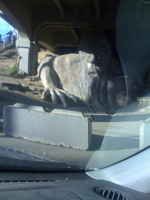
Posted by Glenn Fleishman at 7:32 AM | Permanent Link | Categories: Cellular, Financial, Future, Voice | No Comments | No TrackBacks
T-Mobile rolls out its latest HotSpot@Home offering, Talk Forever Home Service, in Seattle and Dallas: The service, launching in those two markets on 21-Feb-2008, uses a new Linksys router that has two integral RJ11 phone jacks, and accepts SIM cell authentication modules for each line. T-Mobile can port your home numbers to the built-in lines, which also have 911 location information encoded based on your address.
The fee is just $10 per line per month for unlimited domestic calls--you can choose one or two lines--and includes all the features found on cell phones, such as Caller ID, 3-way conferencing, call forwarding, and others. The router costs $49 with a two-year commitment, and the service requires a broadband connection. (This router was spotted on the FCC's site in August 2007, so this isn't much of a surprise; it's all in the timing.)
This new service works alongside the existing HotSpot@Home offering, which allows converged Wi-Fi and cell calling using one of four handset/smartphone models that T-Mobile offers. Pricing was recently lowered for this service to $10 per month for unlimited domestic calling on up to 4 cell phones, making it an easier win for family plans. You can choose either or both the mobile or landline-replacmenent services, but the newer router is required for landline calling.
T-Mobile will still suffer from the same ills that befall standard VoIP (voice over IP) systems like Vonage, because they can't guarantee the transit of data reliably between their supplied router over the customer's broadband connection to their voice gateway. But unlike Vonage, they control a lot of network components, and are less beholden to third parties. And as part of Deutsche Telekom, they're in a better position to complain and see it through if they're discriminated against by competitors.
Both HotSpot@Home and Talk Forever Home require a minimum $40 per month voice calling plan. That means if you sign up for both the mobile and fixed plans, you spend a total of $60 for unlimited home calling on a single line; unlimited weekend and evening calling; either 300 minutes with a MyFaves package (unlimited calls to 5 other domestic numbers of any type) or 1,000 minutes with a current standard individual plan promotion; and unlimited mobile calls originating on Wi-Fi, whether at home or in hotspots. (T-Mobile has a 5-year deal in place with AT&T to cover Starbucks locations as AT&T takes over operations this year of the coffeeshop's Wi-Fi.)
Joe Sims, T-Mobile's broadband products vice president and general manager, said in an interview that they were looking to "address the remaining reasons people were reluctant to cut the cord" and ditch their home wireline service. They found that 50 percent of those signing up for HotSpot@Home are new customers to T-Mobile, and were happy with the service's general uptake, but wanted to remove the last stumbling block to bring landline customers (of other telecoms) over to the service. One in 8 households have cell-only service, Sims said.
Sims noted that this is the "very first T-Mobile product with a dial tone." He also said that the company would have a total of 10 handset models by the time school starts this fall, up from 4 models currently. The World Mobile Congress last week in Barcelona saw the introduction and demonstration of piles of dual-mode cell/Wi-Fi phones, some of which include UMA (unlicensed mobile access), which is the specific technology T-Mobile deployed.
The home line service rolled out to Dallas and Seattle--my home town--can't handle fax machines or alarm systems yet, which is an important proviso. Electronic fax services like Maxemail can more cheaply replace a dedicated fax line, however, and newer alarm systems can be fitted with cellular calling. If you cut your monthly landline bill by $40 per month or more with this service and your long-distance bill by $20 to $40 per month, you might have the money to shift over to the alarm system.
Sims also commented on the Starbucks deal, noting it was critical to T-Mobile that "our customer experience didn't change." I asked if T-Mobile, now having consummated a real roaming relationship--it had some roaming deals for airports and international networks before--might consider other partners, given that their HotSpot@Home service would benefit from a greater number of locations for placing calls. He said, "Going forward, we are looking at other roaming partners. It's less about the footprint and more about the service."
Posted by Glenn Fleishman at 9:01 PM | Permanent Link | Categories: Cellular, Voice | No Comments | No TrackBacks
Posted by Glenn Fleishman at 9:00 PM | Permanent Link | Categories: Cellular | No Comments | No TrackBacks